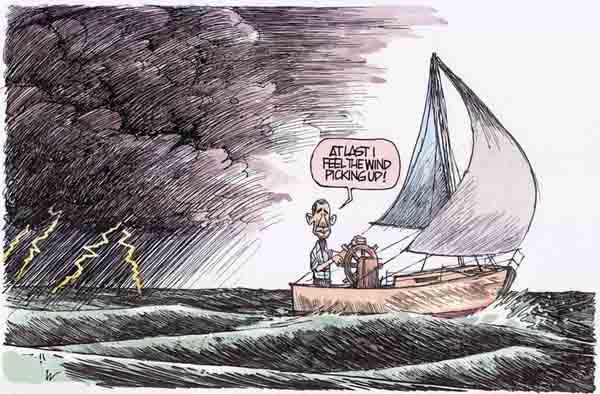
Saudi and other Arab leaders should be aware that the real danger is neither from Iran nor from terrorism. Rather, it is from the call for political, social, economic and cultural, as well as educational reforms, leading to good governance, regional development and the eradication of graft and corruption.
Turki Faisal Al Rasheed
Over the last eight decades, Saudi Arabia was ruled by three generations of the Royal family , on the basis of birth dates, starting with the first generation: King Abdul-Aziz (the founder); the second generation which included sons of King Saud and King Faisal; and the third generation comprising King Khalid, King Fahd and King Abdullah.
Saudi Arabia has encountered many challenges locally, regionally and globally; in this connection, let’s discuss the current problems facing some of the Arab world, which may extend to all other countries. Having said this, I know that I am subjecting myself to a lot of questions as I discuss history in its totality.
Challenges:
The first generation faced local, regional and international challenges in the search for state stability and unity. Domestically, the challenge of establishing the state and local uprising led to the battle of Al Sbalh in 1929 between the Kingdom of Hejaz and Najd and their annexes under the leadership of King Abdul Aziz and the forces of the Muslim Brotherhood, led by Faisal Al-Duwaish and Sultan bin Bajad in the battlefield between Artawiyah and Az Zulfi. As you and I already know, it ended in the victory of King Abdul Aziz’s forces. It was the last major battle fought by King Abdul Aziz for the establishment of the Kingdom of Saudi Arabia. Internationally, the Kingdom inevitably faced the challenges posed by the fall of the Ottoman Empire, the rise and fall of the British Empire and the emergence of American role while coping with world changes and those around King Abdul Aziz during World War II.
The second-generation faced a different challenge. With the advent of the oil boom was the challenge of building the state and the just distribution of wealth among the population and with the region, such as Egypt. Gamal Abdel Nasser, the second President of Egypt, led the Egyptian Revolution of 1952 which overthrew the monarchy in Egypt and Sudan. The new era heralded a period of modernization and socialist reform in Egypt together with a profound advancement of pan-Arab nationalism, including a short-lived union with Syria.
Nasser is seen as one of the most important political figures in both modern Arab history and Third World politics in the 20th century. Under his leadership, Egypt nationalised the Suez Canal and came to play a central role in anti-imperialist efforts in the Arab World and Africa. He was also instrumental in the establishment of the international Non-Aligned Movement (NAM). Nasser was well-known for his nationalist policies and version of pan-Arabism, also referred to as Nasserism, which won a great following in the Arab World during the 1950s and 1960s. Although his status as “leader of the Arabs” was damaged by the Israeli victory over the Arab armies in the Six-Day War, many in the general Arab populace still view Nasser as a symbol of Arab dignity and freedom.
Nasserism did not have a presence on the political level as well as in intellectual and social development; it collapsed as a system and organization as soon as the absence of physical presence and authoritarianism of the hero and leader set in.
With the third generation of King Khalid, King Fahd and King Abdullah, the challenges were multifaceted, such as ever- increasing population structure and the transformation from nomadic society to rural community to live in cities with high level of education coupled with the return of thousands of young men and women who were educated abroad, especially America and Europe. The rise of militant Islam Juhayman Al Otaibi, a militant who led the takeover of the Grand Mosque in Mecca, Islam’s holiest site, in 1979, posed a grave threat. That remains a major challenge for Saudi Arabia to date.
Study shows that 45% of Saudi employees are paid a monthly salary of not more than SR 3000. Three million live in poverty and most families cannot afford to buy a house. The government is facing many challenges such as fighting corruption and fair distribution of wealth. At the same time, it has to accelerate the implementation of measures to combat poverty and unemployment. It also has to fill in key positions in government—including finance, military, and security from less than a handful of families with a weak people’s participation with the exception of the municipal council of which 50% are elected and 50% appointed on an advisory level. All this have led to public frustration but after Jeddah’s second flood catastrophe, the outrage came out into the open.
In the face of all these challenges and the solutions we have, there’s an urgent need to quickly avoid the worst scenario through wide-ranging reforms, including mitigation of the power of the security services and to prosecute state officials found involved in corruption and violations of human rights. Through the establishment of a Commission of Inquiry to investigate the catastrophe in Jeddah, Saudi in focus.com an online survey has been conducted to know the people’s opinion on the outcome of the inquiry. To date the 4766 participants revealed that: 1. Senior officials will be held accountable– 4% (170) 2. Junior Staff will be charged– 6% (303) 3. No results or nothing will happen on the inquiry– 85% (4064) 4. Municipal employees and contractors will be penalized– 5% (229)
It appears that the majority of the participants (85%) voted that no significant findings will prevail. This was proven when the second Jeddah flood disaster came and officials acknowledged that nothing had happened since the first disaster took place. Unfortunately, they did not acknowledge that before the second disaster while still holding their jobs and business was as usual.
Summary:
Some argue that when a government official remains in office for a long time, he’s confused regarding his benefits and those of his country, like what the French phrase “ L’État, c’est moi ” (“I am the State”) says.Some Gulf governments are trying to influence the public to refrain from claims to political and economic reforms, i.e. Kuwait, Bahrain and Saudi Arabia, and this is a kind of procrastination. The people are striving to achieve democratization and choose their own destiny on the basis of effective sovereignty. If they succeed, it will perhaps be the first time in the history of modern Arab states to show signs of implementing internal and external policies to realize the wishes of their peoples, and not according to the wishes or dictates of foreign powers.
If they don’t believe that the era of uprising or revolution has begun, if they eventually fail, they will be succeeded by another regime which does not want to go back to the past – during the dark- tunnel governments. Such a time has gone, gone forever. Huge amounts deposited in foreign banks by corrupt officials will be frozen as soon as the State requests it, such as in the case of the Shah of Iran, Mobutu, Marcos and Ben Ali.
Leaders should be aware that the real danger is not Iran or terrorism, but the lack of political , social , economic, cultural, and educational reforms as well as good governance and development and the eradication of corruption. Conclusion:
The State cannot continue with a handful of family members , who manage all joints of the system, with the people merely spectators. The media and the age of information technology have made it possible for people to demand and expose their bad governments as the Tunisian and Egyptian governments have experienced. The transmission of news and opinion has been easily allowed. This was the most important weapon of the demonstrators in the Tunisian and Egyptian revolutions. So shall the Arab countries take serious and concrete steps to meet the requirements of the people or respond only to those claims when it is already too late? Can the Arab rulers do it and continuously do so? We pray to God for them.